

CCL Injuries Explained: TPLO, TTA, and Extracapsular Repair- How to Choose
One moment your dog is bounding across the yard like they’ve got springs in their legs, and the next they’re limping after an awkward landing or a quick pivot during fetch. Seeing your usually active dog suddenly reluctant to put weight on a leg- or skipping their favorite activities because something clearly hurts- is hard to watch.
If your veterinarian has mentioned a Cranial Cruciate Ligament (CCL) injury (sometimes called a dog ACL tear), you’re probably feeling overwhelmed by terms like TPLO, TTA, and extracapsular repair, wondering which option is right for your dog and how to make sure they get back to their happy, mobile self. You want answers, and you want to know your dog is in the best possible hands.
At Omega Veterinary Group in San Mateo, CA, CCL injuries are one of our specialties- literally. As a criticalist-owned specialty hospital with two board-certified surgeons who focus extensively on orthopedic cases, we have the expertise, technology, and team to guide you through this decision with confidence. Dr. Stephen Jones and Dr. Caleb Hudson bring decades of combined orthopedic experience, advanced training in minimally invasive techniques, and a genuine passion for getting dogs back on their feet. We’re here to help you understand your options, choose the right surgical approach, and support your dog through every phase of recovery. Contact us to start the conversation about your dog’s care.
What Does a CCL Injury Mean for Your Dog?
Most dogs with a CCL injury show a sudden limp, stiffness after rest or play, or reluctance to jump into the car or onto furniture. You might notice them “toe-touching” on the affected leg or sitting with that leg kicked out to the side. Some dogs yelp at the moment of injury; others simply start favoring the leg without a dramatic incident.
Here’s what’s important to know: early attention matters. The sooner we evaluate and address a CCL injury, the better we can limit pain and slow the development of arthritis that inevitably follows joint instability. Waiting and hoping it resolves on its own usually means more damage to the cartilage and meniscus inside the knee.
At Omega, our surgeons and criticalists work together to assess your dog’s knee using advanced imaging and hands-on orthopedic expertise. Our integrated services make it easy to move from concern to clear answers, with gentle handling and state-of-the-art diagnostics that keep your dog comfortable throughout the process.
Understanding What’s Actually Happening in Your Dog’s Knee
The CCL is a ligament inside the knee that keeps the joint stable during movement. When it tears- partially or completely- the shin bone (tibia) can shift forward abnormally every time your dog takes a step. That sliding motion irritates the cartilage, damages the meniscus (a cushioning structure inside the joint), and accelerates arthritis.
Unlike human ACL tears that often happen from a single traumatic event, most canine CCL injuries develop gradually. The ligament weakens over time, then finally gives way- sometimes during normal activity that wouldn’t have caused a problem in a healthy knee.
Why Do CCL Tears Happen?
Several factors contribute to CCL injuries, and most dogs have a combination of risk factors rather than a single cause.
Anatomy plays a role. Some dogs have a steeper tibial plateau angle (the slope of the top of the shin bone), which puts more strain on the CCL with every step. Breeds like Labrador Retrievers, Golden Retrievers, Rottweilers, and Newfoundlands are particularly prone to these injuries.
Lifestyle matters too. Dogs who are weekend warriors- relatively sedentary during the week but intensely active on weekends- put sudden stress on ligaments that aren’t conditioned for it. Extra weight increases the load on joints with every step. Quick pivots on slippery floors or wet grass can be the final straw for an already weakened ligament.
If you suspect a canine cruciate ligament injury, the smartest move is to limit your dog’s activity and schedule an evaluation before more damage occurs. For dogs who need help with conditioning or weight management as part of their recovery plan, our criticalists can coordinate with internal medicine and nutrition specialists through our integrated patient care approach.
How to Recognize the Signs at Home
The most common sign is a limp that doesn’t fully go away with rest. You might notice improvement after a quiet day, but the limp returns as soon as your dog gets active again.
Watch for these patterns:
- Hind-limb lameness that worsens after exercise or play
- Difficulty rising from a lying position, especially after rest
- Hesitation before stairs, jumping, or getting in the car
- Visible swelling around the knee
- A “toe-touching” gait where the leg barely contacts the ground
- Sitting with the affected leg kicked out to the side rather than tucked under
If you’re wondering why your dog is limping, don’t wait to find out. A prompt orthopedic assessment can prevent weeks of unnecessary pain and limit long-term joint damage.
How We Diagnose CCL Injuries at Omega
Confirming a CCL tear involves a careful orthopedic examination combined with targeted imaging. Our goal is to identify exactly what’s happening inside the joint, assess any secondary damage, and build a precise surgical plan tailored to your dog.
The evaluation typically includes:
- Orthopedic palpation tests that assess joint stability in a gentle, controlled way. We’re feeling for abnormal movement that indicates ligament damage.
- X-rays to evaluate bone alignment, rule out fractures, and assess the degree of arthritis already present. X-ray diagnostic imaging gives us essential information about your dog’s knee anatomy.
- Advanced imaging when needed. For complex cases or when we need detailed soft tissue information, our in-house MRI and CT capabilities allow us to see exactly what we’re working with.
Having this technology on-site- along with board-certified radiologists to interpret the images- means faster answers and less stress for you and your dog. No bouncing between facilities or waiting weeks for results.
Surgical Options: TPLO, TTA, and Extracapsular Repair
Surgery is the most reliable way to restore knee stability and give your dog the best chance at returning to an active, comfortable life. While some very small dogs or dogs with significant health concerns may be managed conservatively, most dogs benefit from surgical stabilization.
The three most common approaches are TPLO (Tibial Plateau Leveling Osteotomy), TTA (Tibial Tuberosity Advancement), and extracapsular repair (also called lateral suture stabilization). Each can be successful, but they work differently and are suited to different patients.
TPLO: Changing the Knee’s Biomechanics
TPLO surgery takes a different approach than trying to replace the torn ligament. Instead, it changes the angle of the tibial plateau so the knee no longer needs the CCL to stay stable during weight-bearing.
During TPLO, the surgeon makes a curved cut in the top of the tibia, rotates the bone to flatten the slope, and secures it with a specialized plate and screws. Once healed, the knee functions stably without relying on the damaged ligament.
TPLO is often the preferred choice for:
- Larger dogs (generally over 30-40 pounds)
- Highly active dogs who will return to running, jumping, and playing
- Dogs with steep tibial plateau angles
- Dogs with concurrent meniscal damage
- Working or sporting dogs
TTA: Advancing the Tibial Tuberosity
TTA (Tibial Tuberosity Advancement) is another bone-modifying procedure that stabilizes the knee by changing its biomechanics rather than replacing the ligament. While TPLO changes the angle of the tibial plateau, TTA works by advancing the front portion of the tibia (where the patellar tendon attaches) to neutralize the forces that cause instability.
During TTA, the surgeon makes a cut in the front of the tibia, moves that section forward, and holds it in place with a specialized cage, plate, and bone graft material. This changes the angle of the patellar tendon relative to the tibial plateau, eliminating the forward thrust that occurs when the CCL is torn.
TTA may be a good option for:
- Medium to large dogs
- Dogs with a tibial plateau angle that’s already relatively flat (under 25 degrees)
- Active dogs expected to return to normal activity
- Cases where the specific knee geometry favors this approach
Both TPLO and TTA are well-established procedures with strong long-term outcomes. The choice between them often comes down to your dog’s individual knee anatomy and your surgeon’s assessment of which technique will provide the most reliable stability.
Extracapsular Repair: External Stabilization
Extracapsular repair uses a strong suture material placed outside the joint capsule to limit the abnormal forward sliding motion. Over time, scar tissue forms around the suture, providing additional stability.
Extracapsular repair may be appropriate for:
- Smaller dogs (generally under 30-40 pounds)
- Dogs with lower activity expectations
- Dogs where owner circumstances or health factors make a shorter procedure preferable
Which Surgery Is Right for Your Dog?
This is exactly where having experienced, board-certified surgeons makes all the difference.
Dr. Stephen Jones is a Diplomate of both the American College of Veterinary Surgeons and the European College of Veterinary Surgeons, with special clinical interests that include management of cranial cruciate ligament rupture, joint replacement, and arthroscopy. He has published over 30 scientific papers and actively develops new surgical techniques and implants- meaning your dog benefits from someone who’s literally advancing the field.
Dr. Caleb Hudson is a board-certified surgeon and ACVS Founding Fellow in Minimally Invasive Surgery for Small Animal Orthopedics. His expertise in arthroscopy allows us to evaluate and treat joint damage through tiny incisions when appropriate, reducing tissue trauma and supporting faster recovery.
Together, they’ll review your dog’s imaging, assess their knee anatomy, discuss your activity goals, and recommend the approach that gives your dog the best outcome. This isn’t a one-size-fits-all decision- it’s a recommendation based on decades of combined expertise and thousands of orthopedic cases.
Our surgery and advanced care services include board-certified anesthesiologists who tailor anesthesia protocols to each patient and criticalists who oversee perioperative care. When your dog is on our surgical table, they have an entire team of specialists focused on their safety and comfort.
What to Expect: A Quick Comparison
| Factor | TPLO | TTA | Extracapsular Repair |
| Best candidates | Larger dogs, active lifestyles, steep tibial angles | Medium to large dogs, flatter tibial angles | Smaller dogs, moderate activity levels |
| How it works | Rotates tibial plateau to eliminate need for CCL | Advances tibial tuberosity to neutralize shear forces | External suture limits abnormal joint motion |
| Recovery timeline | 12-16 weeks to full activity | 12-16 weeks to full activity | 12-16 weeks, though some variation |
| Long-term outcomes | Excellent for active dogs; extensively studied | Excellent; comparable to TPLO in appropriate candidates | Good for appropriate candidates |
| Activity after healing | Can return to high-level activity | Can return to high-level activity | Best for moderate, steady activity |
All three surgeries require commitment to rehabilitation and controlled activity during healing. The best outcomes happen when surgery is performed by experienced hands and followed by a thoughtful recovery plan.
What About CCL Injuries in Cats?
While we’ve focused primarily on dogs, cats can also suffer CCL injuries- though it happens less frequently and often looks a bit different.
Cats are generally lighter and more agile than dogs, which means their knees experience less daily stress. When CCL tears do occur in cats, they’re more likely to result from trauma (like a fall or being hit by a car) rather than the gradual degeneration we see in dogs. Overweight cats are at higher risk, as the extra weight puts more strain on the ligaments.
Signs of a CCL injury in cats include:
- Sudden hindlimb lameness, often after a known injury
- Reluctance to jump onto furniture or cat trees
- Sitting with one leg extended rather than tucked
- Decreased activity or hiding (cats are masters at masking pain)
Because cats are smaller and often less intensely athletic than dogs, treatment recommendations can differ. Some cats- particularly smaller, less active ones- may heal adequately with strict rest and conservative management. However, larger cats, active cats, or those with significant instability often benefit from surgical stabilization just like dogs.
The surgical options for cats include extracapsular repair (most common due to cats’ smaller size) and, in some cases, TPLO or TTA for larger cats or those with specific anatomical considerations.
If your cat is limping or showing signs of knee pain, an orthopedic evaluation can determine whether a CCL injury is the cause and what treatment approach makes the most sense. Our surgeons have experience with feline orthopedic cases and can guide you through the options.
Rehabilitation: The Key to Getting Back to Normal
Surgery stabilizes the knee, but rehabilitation rebuilds strength, restores range of motion, and helps your dog return to confident movement. We take rehab seriously at Omega because we’ve seen how much it impacts long-term outcomes.
A structured rehabilitation plan typically includes:
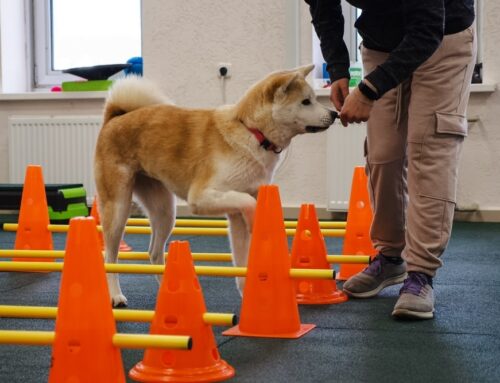
- Controlled leash walks that gradually increase in duration as healing progresses
- Range-of-motion exercises to maintain joint flexibility
- Strengthening exercises targeting the muscles that support the knee
- Hydrotherapy, laser therapy, and other modalities that reduce pain and accelerate healing when appropriate
Our team customizes protocols based on your dog’s surgery, temperament, and home environment. We’ll teach you what to do at home and schedule rechecks to make sure progress stays on track.
The Reality of Crate Rest (And How to Survive It)
Controlled rest protects the surgical repair, especially in the first several weeks when bone and soft tissue are healing. This means limited activity, supervised potty breaks on a leash, and time in a crate or small confined area when you can’t directly supervise.
For active dogs (and their owners), this can be the hardest part of recovery. Here’s how to make it manageable:
Keep their mind busy. Rotate enrichment toys, puzzle feeders, and safe chews. Frozen Kongs, snuffle mats, and simple nose work games provide mental stimulation without physical strain.
Establish predictable routines. Set schedules for potty breaks, meals, and quiet time. Predictability helps anxious dogs settle.
Prevent slips. Use non-slip mats, a supportive harness for potty trips, and block access to stairs and slippery floors.
Be patient with both of you. Crate rest is temporary, and it’s protecting months of healing. Thoughtful tips to survive crate rest with your dog can help everyone get through it.
When questions come up- and they will- our team is here to help with enrichment ideas, medication adjustments, or just reassurance that what you’re seeing is normal.

Long-Term Joint Health: Prevention and Maintenance
Once your dog has healed from CCL surgery, smart habits help protect their joints for years to come.
Maintain a healthy weight. Extra pounds put extra stress on joints with every step. If your dog needs to lose weight, we can help with a safe plan.
Warm up before activity. Structured warm-ups and cooldowns for dogs reduce injury risk, especially for dogs returning to athletic activities.
Make your home joint-friendly. Non-slip rugs, ramps instead of stairs, and raised food bowls all reduce daily strain. The practical mobility matters guide offers broader strategies for living well with joint changes.
Stay on top of follow-up care. Periodic rechecks let us monitor for arthritis progression and adjust management as your dog ages.
Watch the other knee. Here’s something many owners don’t realize: dogs who tear one CCL have a significant chance of tearing the other one, often within a year or two. Maintaining a healthy weight, keeping muscles strong through appropriate exercise, and addressing any early signs of lameness promptly can help protect the other knee.
Our care model means we can coordinate nutrition, pain management, and activity recommendations across specialties- so your dog’s long-term joint health gets the same integrated attention as their surgery.
Why Omega Is the Right Choice for Your Dog’s CCL Surgery
CCL surgery is common, but that doesn’t mean all outcomes are equal. The surgeon’s experience, the quality of perioperative care, and the rehabilitation plan all significantly impact how well your dog recovers.
At Omega, you’re not just getting a surgeon- you’re getting a full specialty team. Our board-certified surgeons, anesthesiologists, criticalists, and support staff work together to ensure every aspect of your dog’s care is optimized. We have advanced imaging on-site, including MRI, CT, digital radiography, and arthroscopy. We’re open 24/7, so if concerns arise after surgery, help is always available.
Our surgeons don’t just perform these procedures- they’re actively involved in advancing the field. Dr. Jones develops new surgical techniques and implants, while Dr. Hudson holds fellowship credentials in minimally invasive orthopedic surgery. When you bring your dog to Omega, you’re accessing expertise that shapes how veterinary orthopedics is practiced.
Most importantly, Dr. Jones and Dr. Hudson genuinely care about getting this right for your dog. They’ll take the time to explain your options, answer your questions, and make sure you feel confident in the plan before moving forward.
Take the First Step Toward Recovery
If you’ve noticed a limp, stiffness, or hesitation in your dog- or your cat- don’t wait. Early evaluation gives us the best chance to limit damage and plan effective treatment.
Our team is here for thoughtful guidance, honest conversations about options, and skilled surgical care when it’s needed. Contact us today to discuss TPLO, TTA, or extracapsular repair for your pet and start planning a recovery that protects their comfort, mobility, and all the adventures you share together.


Leave A Comment